Yanmar is a Japanese company that enjoys global recognition as a leading brand specialising in the manufacture of machinery and engines for the agr
CONSTRUCTION EQUIPMENT, PARTS & SERVICE, SALES
TEL: 01743 718777 FAX: 01743 718867
Yanmar is a Japanese company that enjoys global recognition as a leading brand specialising in the manufacture of machinery and engines for the agr
During the spring and summer months, mowing the lawn becomes something of a weekly routine. Due to heavy use, the engine of your mower may suffer from the effects of wear and tear; however, rather than replacing the whole mower, it may be more economical to change the engine. All lawn mowers follow the same basic principal – a rotated blade is powered by a motor.
There are two types of lawn mower – the rotary mower and the self-propelled mower.

This is the most common garden mower, powered by an internal combustion engine that runs on either two or four stroke cycles. The two-stroke cycle burns a mixture of fuel and oil, whereas the four-stroke cycle burns fuel with a separate lubrication system. Handle bars are attached to the body of the mower and an operator stands behind, pushing the mower forward. The blade is located within a casing called the deck – the deck prevents the grass from becoming too widely dispersed when cut by the blade, a bag is attached to collect the grass cuttings. The rotary mower is also available with an electrically powered motor, which runs using either a cord or a rechargeable battery.
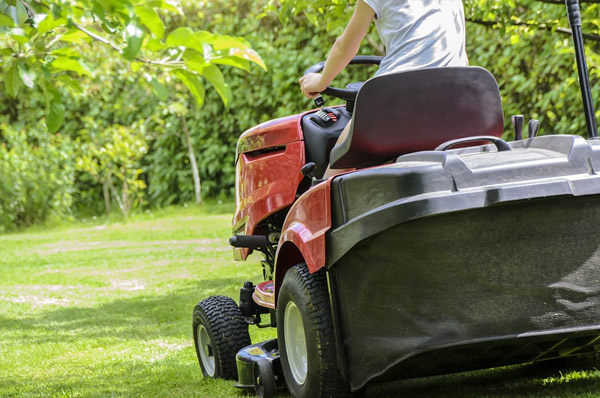
Generally the preferred mower for larger gardens, parks and other large lawned areas. This mower has a transmission that turns the wheels using the power of the motor, typically the operator sits in an open cabin on top and steers the mower.
The engine must be compatible – check the size and type and that they are exactly the same (ideally the same brand). Locate the brand's original engine model type number to make sure the replacement is correct.
The starter type, position, fuel tank location, fuel line routing, exhaust direction of the original engine should all be maintained.
Verify horse power measurement (the frame of the lawn mower needs to withstand the power of the engine).
Check the crankshaft orientation and size to ensure it is of the correct fit.
Always wear safety gear, overalls, gloves and safety glasses
Call AT Wilde and Son Ltd today for expert advice on replacing your lawn mower’s engine.