Yanmar is a Japanese company that enjoys global recognition as a leading brand specialising in the manufacture of machinery and engines for the agr
CONSTRUCTION EQUIPMENT, PARTS & SERVICE, SALES
TEL: 01743 718777 FAX: 01743 718867
Yanmar is a Japanese company that enjoys global recognition as a leading brand specialising in the manufacture of machinery and engines for the agr
An excavator is a type of construction vehicle that can be used in a variety of different ways, mainly to dig or move large objects. Excavators are commonly seen on construction sites and roadwork development projects.
These days excavators are even more powerful and productive than ever before, with so many choices how can you be sure you are getting the machine you need? It is important to make a detailed assessment before making your purchase, to be sure you get value for money as well as all the attributes you need from your excavator.
The following are some examples:
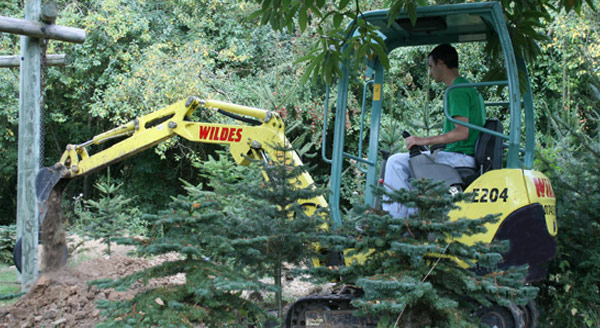
Cab – A cabin where the operator sits and controls the machine
Undercarriage – Home to the gears and motor, and track roller that moves over the ground
House – Contains engine, fuel cylinders and oil, is connected to the house
Engine – Powers the machine and the hydraulics used to operate the boom
Boom – The extension that connects to the attachments
Attachments – Connected to the boom, there are a variety of different attachments e.g. trenching buckets, grading buckets, hydraulic breakers, plate compactors, rippers, grapples, clamps etc...
Stick – Connects the boom to the undercarriage and is able to adjust in length depending on the distance necessary to operate the boom and the dig.
There are a variety of different types of excavator, each type will have its own particular features making it ideal for certain tasks.
Mainly used for landscaping and forestry purposes, sometimes for light construction, these excavators work well in smaller tight spaces, have a dig depth of 0-6ft, operating weight of up to approximately 8 tonnes and weigh approximately 1 tonne.
Are multi purpose, uses include; digging trenches/holes, loading trucks, lifting pipe. They are a common choice, remaining balanced and stable even on extremely rough surfaces, and are less likely to get stuck in uneven terrain.
These are amongst the largest and can weigh up to 10 tonnes, commonly used in civil engineering and surface mining, road building projects and in quarries.
Ideal for low, more difficult to reach areas, are suited to work on waterways as they can dredge material under water. Unlike the high reach excavators, longreach excavators are not suitable for high side twisting movements.
This has a very long boom arm, especially designed for the demolition of tall buildings, as it is able reach upper floors and pull them down in a controlled way.
Sometimes known as a vacuum excavator, this is a construction vehicle that removes material or debris through a wide suction pipe, an extremely large machine, weighing up to 32 tonnes.
Excavators are available in a wide range of sizes and capacities. The most important consideration is what will your excavator be used for? It needs to meet your job requirements and nothing more, with a weight capacity large enough to accommodate your requirements. By purchasing or hiring a machine that is stronger than you need it to be, will obviously waste money, on the purchase or hire itself, transportation costs and the running of the machine.
Size – This dictates digging power and depth, it's also important to bear in mind, the bigger the excavator, the more difficult transportation will be and the more possible surface damage is likely to occur. Compact excavators are a popular option for very tight spaces that don't require high power.
Jobsite location - Does it have tight spaces? What is the environment like at the site location? Is there water? Is the soil hard or loose?
Dump height – If you are planning to place exhumed materials into a removal truck/container, the boom and bucket need to be able to clear the height of it.
Bucket capacity – How much material will you need to remove at any one time? This is the bucket capacity.
Dig depth – What is the maximum depth you can dig or remove materials? Excavators with excess depth are more expensive, think carefully about how deep you will need to dig.
Operating Weight – What is the maximum weight load at the end of the boom, is it adequate for your project?
Engine power – Compare specifications to find the engine size ideal for the maximum dig depth, weight and size you need for your project
Costs – Would it be better to purchase or rent your excavator? Should you purchase a new or used machine?
Attachments - Does the machine have all the necessary attachments you require? How easy are the attachment changes? Hydraulic systems generally provide easy attachment changes.
Protection - An excavator is a large, powerful machine that can be extremely dangerous if it is not operated in the correct way. What are the safety features on your chosen machine? Does it have a control console lock system that prevents unintended boom movements? What is the cabin design? Modern excavators have ergonomically designed cabins, that create a healthier environment for the operator to work in. Such as; cabin climate control, remote start, padded seats, easy access to the cabin, adjustable armrests and seat height, as well as adjustable lumbar support for the back and tilt options.
Inspect before you buy, where possible take your excavator out for a test drive.
What are the maintenance requirements? If you are buying a used excavator, what does the guarantee cover? If you are leasing one, are you liable for maintenance? What kind of support will you get if there is a problem on the field?
We specialise in Kubota and Yanmar compact excavators so if you would like any help or advice, then please don't hesitate to give us a call on 01743 718777.