Yanmar is a Japanese company that enjoys global recognition as a leading brand specialising in the manufacture of machinery and engines for the agr
CONSTRUCTION EQUIPMENT, PARTS & SERVICE, SALES
TEL: 01743 718777 FAX: 01743 718867
Yanmar is a Japanese company that enjoys global recognition as a leading brand specialising in the manufacture of machinery and engines for the agr
Generators are used all over the world in a wide range of different situations from domestic, to businesses and health organisations to provide electricity when it is unavailable from the local grid. They are also used as a primary power source in areas where energy is difficult to access, such as on the construction site, in mining, farming operations etc.
The electrical generator itself is a standalone machine which coverts mechanical or chemical energy into electrical energy. This is achieved by capturing electrons from an external force (the mechanical energy) and forcing it through an electrical circuit. An electrical motor functions by a similar process to that of the generator, although in reverse – rather than mechanical energy being transformed into electrical energy (as is the case of the generator), electrical current is transformed into mechanical energy. The origins of the modern-day generator are often attributed to the principals of electromagnetic induction, discovered by Michael Faraday in 1831-32.
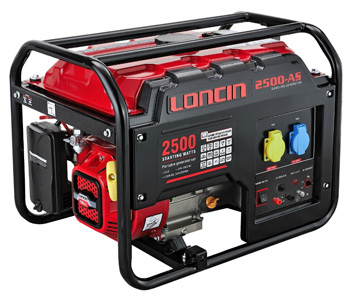
Smaller generators typically rely on fossil fuels to create mechanical power – these types of generators are widely used on construction projects, however larger generators of electrical power use other sources such as water, hydro dams or wind turbines. On the commercial market, there are two main types of generator available – standby and portable.
This type of generator is permanently installed outside homes or commercial buildings and is used in the event of disruption to the main power supply – the standby generator can either be manually switched on or will start automatically upon detection of a failure to the power supply. Such generators are a common feature in hospitals as well as in residential buildings in some parts of the world, they are typically fuelled by diesel, petrol or gas.
There are various different types of portable generator available – these come in a variety of models with differing power capacities and functions.
Portable generators offer numerous uses including but not limited to the following, residential buildings, offices, emergency medical equipment, construction sites, development projects, hospitality and events, as well as other industrial and recreational purposes such as camping.
One industry which relies heavily on portable generators is on the construction site where they are used for powering heavy duty equipment and power tools – much of which requires a high-power capacity.
When choosing a generator, it is advisable to consider the following:
Most modern generators come with AVR as standard – this feature prevents voltage fluctuations which may harm sensitive electronic equipment. Newer generators offer digital automatic voltage regulation, a marked improvement on standard AVR.
Circuit breakers are installed into all generators – these shut down the flow of power if there is an excessive current passing through, preventing damage from occurring to connected equipment.
Automatic safety shut down features mean the generator will automatically shut itself down in the case of unsafe operating conditions such as high temperatures, low oil levels or oil pressure etc.
Generators fitted with liquid cooling systems are able to run more quietly and reliably.
Other features:
To avoid the risk of electrocution, generators must be kept dry and not used in the rain or snow. A generator should never be handled with wet hands. Care should also be taken when connecting to mains electricity – connecting incorrectly can be extremely dangerous.
Generators should only ever be operated outside – exhaust fumes produced by the generator contain toxic carbon monoxide which can be fatal.
Whilst in operation, generators can become extremely hot and can easily cause burns.
AT Wilde & Son supply a wide product range of parts, engines and generators by all leading manufacturers. For more advice and assistance choosing your generator, get in touch today.