Yanmar is a Japanese company that enjoys global recognition as a leading brand specialising in the manufacture of machinery and engines for the agr
CONSTRUCTION EQUIPMENT, PARTS & SERVICE, SALES
TEL: 01743 718777 FAX: 01743 718867
Yanmar is a Japanese company that enjoys global recognition as a leading brand specialising in the manufacture of machinery and engines for the agr
An excavator is a type of construction vehicle that can be used in a variety of different ways, mainly to dig or move large objects. Excavators are commonly seen on construction sites and roadwork development projects.
Excavators are commonly constructed of the following elements:
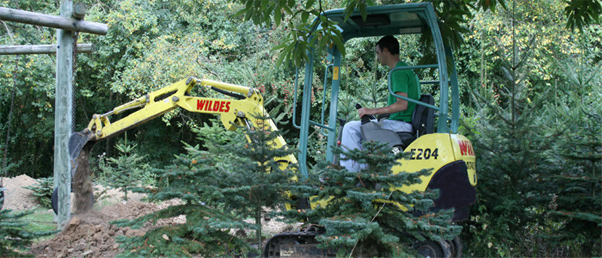
Yanmar unveiled the first compact excavator in 1971 and they continue to be the industry leader today.
As their name suggests, compact (or mini) excavators are smaller and lighter, typically weighing between 0.7 to 8.5 tonnes. Modern compact excavators are powered by hydraulic systems to move the boom, stick and attachment.
Compact excavators are available with wheels or tracks. Wheels are ideal for flat, smooth terrain such as roads, whereas tracks can be used for rougher terrain such as dirt or gravel. Whether they have wheels or tracks, mini excavators are considerably different to operate from your standard road vehicle, therefore specific training is required to operate them correctly.
To put it simply, they work incredibly well in small spaces and bring a lot of power to jobs where space may be restrictive. They are often much smaller than standard excavators, and because of the sheer amount of attachments available, they can be used for a large array of jobs (see below). Additionally, the cab on most mini excavators can move 360 degrees, offering a great range in motion especially in smaller spaces.
Mini excavators are commonly used for small to medium-sized operations such as landscaping and forestry purposes, light construction work or small demolition projects. They can basically be used for almost any job that is too big for a shovel, or other basic hand tools. Because of the range of attachments that are available, some more common jobs for a mini excavator are as follows:
As mentioned above, mini excavators are incredibly versatile and can be used for a number of jobs. Although, you should take the following into account before hiring one:
A T Wilde & Son specialises in the sale, parts and servicing of construction equipment and can assist with any queries about compact excavators and their parts. We are dealers of top brands including Kubota, Yanmar and many more.
Our associate company Wildes Plant Hire has a full fleet of Yanmar mini excavators available for hire. Please call 01743 718 777 for more information.